QUICKSILVER MESSENGER SERVICE
Without John Cipollina (as Quicksilver):
Comin' Thru
Quicksilver
Live At The Winterland Ballroom - December 1, 1973
Live at the Quarter Note Lounge, New Orleans, LA, July 26, 1977
Peace By Piece
Shape Shifter
Shape Shifter Volume 1
Shape Shifter Volume 2
Shape Shifter Volume 3
Shape Shifter Volume 4
Live at Field Stone
Strange Trim
Three in the Side
Live at Sweetwater
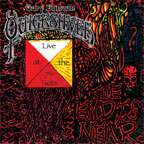
Live at the 7th Note
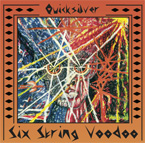
Six String Voodoo
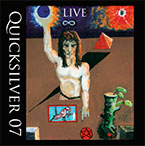
Quicksilver 07 Live
Comin' Thru
| Tracks | |||
|---|---|---|---|
| 1. | Doin' Time in the USA | 4:20 | (Duncan) |
| 2. | Chicken | 3:58 | (Trad. arr. Valenti) |
| 3. | Changes | 4:02 | (Valenti) |
| 4. | California State Correctional Facility Blues | 6:28 | (Valenti/Duncan/Elmore/Steaks) |
| 5. | Forty Days | 5:51 | (Duncan/Elmore/Valenti) |
| 6. | Mojo | 5:38 | (Valenti) |
| 7. | Don't Lose It | 6:08 | (Duncan/Valenti) |
| Personnel | ||
|---|---|---|
| Dino Valenti | vocals, guitar, cungas | |
| Greg Elmore | drums | |
| Gary Duncan | guitar, vocals | |
| Mark Ryan | bass | |
| Chuck Steaks | organ | |
| Marcellus | "Equipment" | |
| John Wilson | Mixer | |
| Cecil Jones | Engineer | |
| Ken Baizell | trumpet | 5 |
| Dalton Smith | trumpet | 3, 6, 7 |
| Bud Brisbois | trumpet | 3, 6, 7 |
| Pat O'Hara | trombone | 5 |
| Charles C. Loper | trombone | 3, 6, 7 |
| Sonny Lewis | saxophone | 5 |
| Donald Menza | saxophone | 3, 6, 7 |
Spiritual Advisor in Capitol Relations: Al Coury
Resident Angel: Larimee
Illustration: Burry Olsen
Photography: Don Peterson
Art Director: John Hoernie
| Release History | |||||
|---|---|---|---|---|---|
| Label | Cat No | Country | Format | Date | Notes |
| US | LP | ||||
| US | MC | ||||
| BGO Records | BGOLP88 | UK | LP | ||
| BGO Records | BGOCD88 | UK | CD | 1991 | |
| Culture Factory | US | CD | 2012 | Vinyl Replica, Collector's Edition, Limited Edition, Original Recording Remastered | |
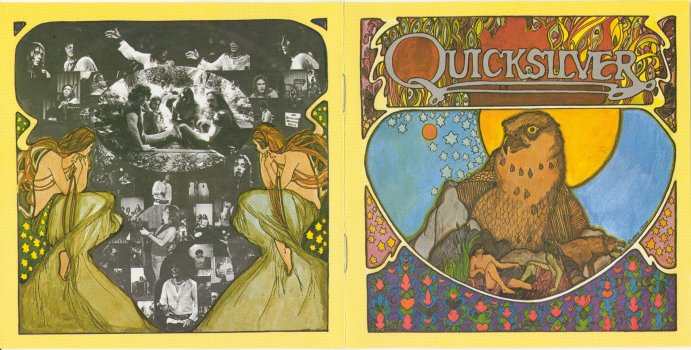
Quicksilver
| Tracks | |||
|---|---|---|---|
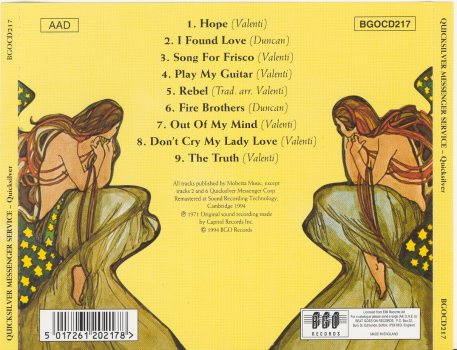
| 1. | Hope | 3:02 | (Valenti) |
| 2. | I Found Love | 3:56 | (Duncan) |
| 3. | Song For Frisco | 4:59 | (Valenti) |
| 4. | Play My Guitar | 4:38 | (Valenti) |
| 5. | Rebel | 2:03 | (Trad. arr. Valenti) |
| 6. | Fire Brothers | 3:12 | (Duncan) |
| 7. | Out of My Mind | 4:34 | (Valenti) |
| 8. | Don't Cry My Lady Love | 5:12 | (Valenti) |
| 9. | The Truth | 6:59 | (Valenti) |
[BGO CD Details]
All tracks published by Mobetta Music, except
tracks 2 and 6 Quicksilver Messenger Corp
Remastered at Sound Recording Technology,
Cambridge 1994
(P) Original sound recording made
by Capitol Records Inc.
(C) 1994 BGO Records
[BGO CD booklet notes]
California was the melting pot of rock innovation in the mid-1960s. The United States hit back after the knock out punch inflicted by the so called British invasion, when most American rock acts found themselves desperately unfashionable - largely because they were American. The Byrds were the most credible US group, because The Beatles had given the Los Angeles quintet their seal of approval, and innumerable LA acts emerged and usually disappeared in their wake (exceptions included Love, Buffalo Springfield, The Turtles, The Mothers of Invention and a few more). San Francisco, a cosmopolitan sea port a few hundred miles north of Hollyweird and the other trendy L.A. suburbs had acquired a reputation for musical eclecticism - notable blues artists, folk singers, jazzers of many persuasions, bluegrass pickers - and during the heyday of hippiedom circa 1964, a number of ultimately world famous groups began to assemble there. There would eventually include The Grateful Dead, Jefferson Airplane, Country Joe & The Fish, Big Brother & The Holding Company and so on, but at the start of this movement, Jerry Garcia was probably in Mother McCree's Uptown Jug Champions and Grace Slick was recording 'Somebody To Love', later Airplane smash, with The Great Society, the group she formed with her first husband, Darby. Another of the notable San Francisco groups who stood alongside The Dead and the Airplane was Quicksilver Messenger Service, but for various reasons, such as their lack of a figurehead along the lines of a Garcia, a Slick, a Joe McDonald or a Janis Joplin, Quicksilver failed to achieve the commercial success and fame which accrued to the big name Bay Area acts which were their contemporaries. Nevertheless, their recorded output has easily stood the test of time, and they are among the most respected groups of their era.
Two of the musicians who would play in the classic line-up of Quicksilver Messenger Service, drummer Greg Elmore and singer/guitarist Gary Duncan (real name Gary Grubb), were members of The Brogues, a quartet whose choice of group name instantly suggests that they were attempting to pretend that they were British. Little did they realise that most of the biggest British group names were just as obviously American-inspired: if Buddy Holly hadn't led the Crickets, The Beatles might have remained The Nurk Twins and the Rolling Stones were clearly paying homage to an American blues idol in their choice of group name. The Brogues? The Hush Puppies? Mind you, The Byrds made the same mistake, recording as The Beefeaters (a very English name) before properly taking flight... The original members of Quicksilver Messenger Service were going to be John Cipollina (lead guitar), ex-folk musician David Freiberg (bass), and vocalists Dino Valenti (also a rhythm guitarist) and Jim Murray, who played harmonica, but Valenti fell foul of the drug laws and went to jail. Undeterred, Cipollina, Freiberg and Murray recruited Alexander 'Skip' Spence (guitar, vocals) and drummer Casey Sonoban, who were in the band for less than a year. Sonoban resurfaced briefly in the early 1970s with Copperhead, a group led by Cipollina, which also included Jim Murray. Got that? Quicksilver's story sometimes seems more like a complicated video game than a record of a band's progress... By mid-1965 Spence had left to join Jefferson Airplane (briefly) before launching Moby Grape, which is a whole different story for another time. Sonoban, the drummer, left for comparative obscurity until he became an early member of Copperhead, of which more later. Cipollina, Freiberg & Murray recruited Elmore and Duncan from The Brogues, and this quintet developed a huge local following in California, refusing to play outside the Golden State, with particular (and frequent) reference to San Francisco, the city in which they formed. However, they didn't get a record deal like The Dead or The Airplane. Quicksilver apparently felt that their peer groups had suffered due to the pressure of nation-wide touring, and preferred to survive from local gigs without jumping on this potentially soul-destroying roundabout. In late 1967, Murray left the band after refusing to rehearse for the group's appearance in a hippie-exploitation movie titled 'Revolution', which tried to convey life in the Bay Area with all its acid dropping weird-looking modern beatniks, whose musical preference was for loud, psychedelic bands who played R&B-flavoured material with extended instrumental passages. The film soundtrack album included two lengthy Quicksilver epics, especially a long drawn-out cover of Buffy Sainte-Marie's ode to the potentially addictive quality of prescription drugs, 'Codine'. Cipollina and Duncan played exquisite twin lead guitar (their work as a lead duo has never been bettered), and the former's utterly distinctive and intense trembling sound was widely heard around America for the first time (albeit in a package which also featured the similarly unsigned Steve Miller Band and Mother Earth, a group fronted by country/rock queen Tracy Nelson).
The film soundtrack appeared on United Artists just as Capitol Records, which had previously failed to acquire a psychedelic San Francisco band, signed both Quicksilver and Steve Miller for substantial advances. 'Quicksilver Messenger Service', an excellent debut album, appeared in the spring of 1968, and was disappointingly received critically, despite peaking respectably just outside the Top 50 of the US album chart. While planning their next album, perhaps the group members realised that their following had been built from live performances, which was why they decided that their second album would include a live marathon, a 25 minute version of Bo Diddley's 'Who Do You Love', with each member of the group (first Duncan, then Elmore, next Cipollina and last Freiberg) demonstrating their command of their various instruments.
The album was titled 'Happy Trails', and many feel that it may be the finest album of the psychedelic era by a San Francisco group - quite an accolade bearing in mind that the competition includes the present-day stadium acts named above. Another lengthy track, 'Mona', is also borrowed from the Bo Diddley songbook, then came a couple of group originals (notably 'Maiden Of The Cancer Moon') before a short but bizarre sign-off with an unlikely version of 'Happy Trails', the signature tune of Hollywood cowboy Roy Rogers (as sung to his horse, Trigger, presumably). The album stayed in the US chart for longer than any of their others, reaching the Top 30, an impressive feat, but the near-perfect combination was upset by the departure of Duncan and the arrival of English keyboard player Nicky Hopkins, who had moved to San Francisco from England ironically to work on Steve Miller albums after emerging in London with the first Jeff Beck Group (whose vocalist was Rod Stewart and whose bass player was latter-day Rolling Stone Ron Wood).
With Freiberg now the main vocalist, Quicksilver recorded their 'Shady Grove' album in 1969. It achieved their highest ever US chart placing, although it fell out of the chart more quickly than either of its predecessors. Duncan had left to work with Dino Valenti (now a free man) in a band called The Outlaws (doubtless something to do with Valenti's chequered past), but after a year supposedly spent fruitlessly searching for a rhythm section, the duo joined the 'Shady Grove' line-up onstage for a New Year's Eve concert on the last day of 1969, and stayed on after the gig for six months during which the sextet cut a fourth Quicksilver album, 'Just For Love', which equalled the chart peak of 'Happy Trails', but disappeared as quickly as 'Shady Grove'. Conflicts between Valenti (who could accurately claim to have written a big hit, 'Get Together', which later became a hippie anthem) and Hopkins resulted in the latter's departure in mid-1970. Well before the end of that year, Cipollina also left during the recording of the group's fifth album, apparently because he, like Hopkins, was unhappy with Valenti's growing predominance. The resulting album included contributions from Mark Naftalin (previously most notable for his work with the Butterfield Blues Band), who was replacing Hopkins, plus various session men who were recruited to complete the recordings after Cipollina departed.
Cipollina quickly formed Copperhead, a group which evolved from sessions for a never-released solo album by Jim Murray (the original Quicksilver vocalist), which Cipollina was producing. Others involved included original Quicksilver drummer Casey Sonoban, Cipollina's younger brother Mario on bass, who later achieved considerable success as a member of Huey Lewis and The News, Nicky Hopkins, and guitarist Gary Phillipet, who later joined the excellent late 1970s San Francisco band, Earthquake, where he was known as Gary Phillips. With the departure of John Cipollina, Quicksilver lost their greatest asset, and although, as we shall see, the group continued to make interesting albums, their sound was never as distinctive as when he was a group member.
'What About Me', the album that was in preparation when he left, was Quicksilver's fourth consecutive album in under two years to reach the Top 30 of the US album chart, but they never again approached such commercial heights of popularity. In September, 1971, Freiberg was busted and jailed for marijuana possession, which left Duncan and Elmore as the only two survivors of the classic line-up of Quicksilver - rather than returning to Quicksilver after completing his sentence, Freiberg joined Jefferson Starship and played on many of their biggest albums. Quicksilver, now controlled by Valenti, by this time included ex-Country Joe & The Fish bass player Mark Ryan, a keyboard player with the unlikely name of Chuck Steaks, Duncan and Elmore, and it was this line-up which cut the 'Quicksilver' album, released in late 1971, which maintained their 100% record of making the US chart with each new release, although this was the first which failed to reach the Top 100. From this point on, the group was in gradual decline, and 1972's 'Comin' Thru', again with the same line-up, also peaked outside the Top 100 of the US album chart, while 1973's 'Anthology', as its title suggests, was a compilation double album which achieved a better chart placing than either of the albums which preceded it, but still peaked outside the Top 100 of the US chart. Capitol Records seemingly decided that they could not make a commitment for a brand new Quicksilver album, and in 1975, Cipollina and Freiberg returned to record 'Solid Silver', an album which briefly returned the group to the US Top 100, but could not be said to mark a complete return to their past glory days. Freiberg was tied to Jefferson Starship, and even though Cipollina toured with the band as a guest, the spark which had made the band great was absent, and after the tour, they fell apart.
Little has been heard from the various members of the band subsequently, other than Freiberg, who remained in the Jefferson Starship camp until the mid-1980s, and Cipollina, who played in a number of mainly short-lived San Francisco bands, as well as guesting on tour with Welsh group Man in 1975, and appearing on their 'Maximum Darkness' album, before sadly dying from emphysema in 1989 at the tragically early age of 45.
The fascinating fact about Quicksilver Messenger Service which certainly inspired their quite unforgettable group name (and which some feel may have contributed to the unique chemistry of the group's classic line-up) was that all four musicians who played in that version of the band shared the birth sign Virgo. Freiberg and Cipollina both celebrated birthdays on August 24, while Elmore and Duncan were similarly born on September 4. All four were born between 1938 and 1946. Freiberg once explained the origin of the group name by noting that Mercury was the ruling planet of all four members, and Mercury was not only another term for liquid metal (quicksilver), but also the messenger in Greek mythology. It remains a minor tragedy of rock history that circumstances prevented the group again reaching the inspiring heights of their first two albums, but there is nothing that can be done to change that sad fact. At least they left a couple of utterly brilliant albums and several more with moments of genius for posterity.
John Tobler, 1993
[The text above is as printed in the booklet, except that I have corrected the spelling of Cipollina which consistently appears as 'Cippolina' - not John Tobler's fault, I'm sure. This same text also appears in the BGO release of 'Happy Trails'.]
| Personnel? | ||
|---|---|---|
| Dino Valenti | guitar, vocals | |
| Greg Elmore | drums | |
| Gary Duncan | guitar, vocals | |
| Mark Ryan | bass | |
| Chuck Steaks | keyboards, organ | |
| Release History | |||||
|---|---|---|---|---|---|
| Label | Cat No | Country | Format | Date | Notes |
| US | LP | ||||
| US | MC | ||||
| BGO Records | BGOCD217 | UK | CD | 1994 | |
| Culture Factory | US | CD | 2012 | Vinyl Replica, Collector's Edition, Limited Edition, Original Recording Remastered | |
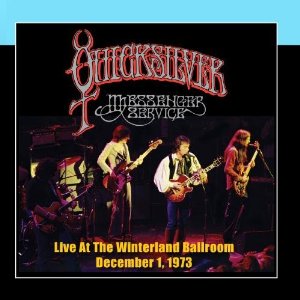
Live At The Winterland Ballroom - December 1, 1973
| Tracks | |||
|---|---|---|---|
| 1. | Losing Hand | 9:28 | |
| 2. | Play My Guitar | 4:37 | (Valenti) |
| 3. | Mojo | 9:48 | (Valenti) |
| 4. | What About Me | 7:54 | (Jesse Oris Farrow) |
| 5. | The Hat | 10:34 | (Jesse Oris Farrow) |
| 6. | Who Do You Love? | 8:50 | (Ellis McDaniel) |
| 7. | Jam #1 | 4:36 | |
| 8. | Jam #2 | 6:13 | |
| Release History | |||||
|---|---|---|---|---|---|
| Label | Cat No | Country | Format | Date | Notes |
| Cleopatra | US | CD | 2012 | ||
Live at the Quarter Note Lounge, New Orleans, LA, July 26, 1977

| Tracks | |||
|---|---|---|---|
| Disc 1 | |||
| 1. | Dr Feelgood | ||
| 2. | Baby Baby | ||
| 3. | Mona | ||
| 4. | Play My Guitar | ||
| 5. | Gypsy Lights | ||
| 6. | Cowboy on the Run | ||
| 7. | Bittersweet Love | ||
| 8. | What About Me? | ||
| Disc 2 | |||
| 1. | Freeway Flyer | ||
| 2. | I Wanna Fly | ||
| 3. | Subway | ||
| 4. | Rambling Gambler | ||
| 5. | Who Do You Love | ||
[Voiceprint catalogue text]
Quicksilver Messenger Service is considered to be one of the most important bands to come from the San Francisco music scene of the sixties along with their contemporaries The Grateful Dead and The Jefferson Airplane. The band initially came together in 1965 and proceeded to play a great many gigs across America.
The bands debut album the self title Quicksilver Messenger Service was released in May 1968 and was an eclectic affair including key songs that still stand up to scrutiny forty years later. The album includes Pride of Man, Dino's Song (Written by Valenti), Gold and Silver and the extended song The Fool.
The following year the band released what many consider to be their best album. Entitled Happy Trails the album broke into the top 30 and included a side long suite of songs based around the Bo Diddley song Who Do You Love. Happy Trails also included another Diddley song Mona and also the Gary Duncan composed Calvary. The album set the seal on the bands reputation as one of the key bands of the time and certainly one of the key bands to come from the San Francisco music scene. Shortly after the release of Happy Trails however Gary Duncan departed and he was replaced by English keyboard player Nicky Hopkins. With this line up the band recorded Shady Grove which was another top thirty success for the band.
By the time of the 1970 release Just For Love Gary Duncan had returned and Dino Valenti also joined up. Further albums including What About Me (1970), Quicksilver (1971) and Comin' Through (1972) were released although by the time of the Quicksilver album both Frieberg and Cippolina had gone.
This recording hailing from July 1977 was one of the many partial reunions that took place between 1976 and 2006. The line up features key members Dino Valenti and Gary Duncan. Songs performed at the concert included staples of the Quicksilver live repertoire including Who Do You Love and Mona alongside lesser known songs Bittersweet Love and Cowboy On The Run from the bands reunion album Solid Silver.
| Personnel? | ||
|---|---|---|
| Dino Valenti | guitar, vocals | |
| Gary Duncan | guitar, vocals | |
| Release History | |||||
|---|---|---|---|---|---|
| Label | Cat No | Country | Format | Date | Notes |
| Bear Records | VP114CD | CD | 2009 | ||
Peace By Piece

| Tracks | |||
|---|---|---|---|
| 1. | Good Thang | ||
| 2. | 24 Hour Deva Vu | ||
| 3. | Midnight Sun | ||
| 4. | Swamp Girl | ||
| 5. | Wild in the City | ||
| 6. | Pool Hall Chili | ||
| 7. | Crazy Jesse | ||
| 8. | Pistolero | ||
| 9. | Electric Love | ||
| 10. | Peace by Piece | ||
| Personnel |
|---|
| Release History | |||||
|---|---|---|---|---|---|
| Label | Cat No | Country | Format | Date | Notes |
| US | LP | 1986 | |||
| US | CD | 1997 | |||
Shape Shifter

| Tracks |
|---|
| Personnel |
|---|
| Release History | |||||
|---|---|---|---|---|---|
| Label | Cat No | Country | Format | Date | Notes |
| CD | 1996 | ||||
Shape Shifter Volume 1

| Tracks | |||
|---|---|---|---|
| 1. | Rebel | ||
| 2. | Big Bright Street | ||
| 3. | The Dog Song | ||
| 4. | Bubba Jeans | ||
| 5. | Life is so Funky | ||
| 6. | Angeline | ||
| 7. | Carnival Time in Nicaragua | ||
| 8. | I don't want to Hear it Anymore | ||
| 9. | Don't go to Strangers | ||
| 10. | Richmond Welfare Strut | ||
| 11. | Nobody but you | ||
| 12. | We'll be together | ||
| 13. | Tattoo | ||
Reissue of disc one from the original Shape Shifter album
| Personnel |
|---|
| Release History | |||||
|---|---|---|---|---|---|
| Label | Cat No | Country | Format | Date | Notes |
| CD | |||||
Shape Shifter Volume 2

| Tracks | |||
|---|---|---|---|
| 1. | Rex Dark | ||
| 2. | King-O-China | ||
| 3. | Snowman/Nica's Dream | ||
| 4. | The Fatman | ||
| 5. | Steve McQueen | ||
| 6. | Close Enuf for Jazz | ||
| 7. | Please Don't touch the Tip | ||
| 8. | Ganster Purple | ||
| 9. | Vera Cruz | ||
| 10. | What Did You Do to Yo Do | ||
| 11. | Jackie Boy | ||
| 12. | Blue Weasel on Ice | ||
| 13. | Hoochie Coochie Man | ||
| 14. | Sugar Pie | ||
| 15. | Holiday | ||
Reissue of disc two from the original Shape Shifter album
| Personnel |
|---|
| Release History | |||||
|---|---|---|---|---|---|
| Label | Cat No | Country | Format | Date | Notes |
| CD | |||||
Shape Shifter Volume 3

| Tracks | |||
|---|---|---|---|
| 1. | Light up the Night | ||
| 2. | Cover Girl | ||
| 3. | Steve McQueen | ||
| 4. | Close Enuf for Jazz | ||
| 5. | Ganster Purple | ||
| 6. | Carnival Time in Nicaragua | ||
| 7. | Vera Cruz | ||
| 8. | Bubba Jeans | ||
| 9. | What Did You Do to Yo Do | ||
| 10. | Time to Shine | ||
| 11. | Angeline | ||
| 12. | Jackie Boy | ||
| 13. | King-O-China | ||
| 14. | Snowman | ||
| 15. | Holiday | ||
| 16. | Life is so Funky | ||
| 17. | Fall'in For You | ||
Original unreleased version of Shape Shifter. It features Gary Duncan playing most of the instruments. It includes very different versions of the songs from the original Shape Shifter and three previously unreleased tracks: Light up the Night, Cover Girl and Time to Shine.
| Personnel |
|---|
| Release History | |||||
|---|---|---|---|---|---|
| Label | Cat No | Country | Format | Date | Notes |
| CD | |||||
Shape Shifter Volume 4

| Tracks |
|---|
Unreleased instrumental version of shape shifter. this is a very unique album that gives fresh outlook on the Shape Shifter series and features some awesome instrumental guitar work from Gary Duncan.
| Personnel | |||
|---|---|---|---|
| 1. | Amazonian Wombat Blues | ||
| 2. | Grunge Bunny and the Fat Man | ||
| 3. | Ganster Purple-Inst | ||
| 4. | Please Don't Touch the Tip-Inst | ||
| 5. | Bert's Blues | ||
| 6. | Vera Cruz-Inst | ||
| 7. | The River | ||
| 8. | Ganster Purple-Inst | ||
| 9. | Katmandhu | ||
| 10. | Gene and Willie Conjure the Cave Demon | ||
| Release History | |||||
|---|---|---|---|---|---|
| Label | Cat No | Country | Format | Date | Notes |
| CD | |||||
Live at Field Stone
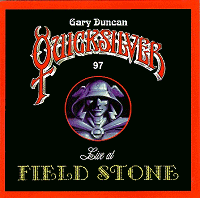
| Tracks | |||
|---|---|---|---|
| 1. | Voodoo Boogie #1 | 10:29 | (G. Duncan, M. Lewis, G. Errico, B. Vega, J. Bird, T. Menjivar) |
| 2. | Senor Blues | 7:07 | (Horace Silver) |
| 3. | Gator Bait | 6:06 | (John Bird) |
| 4. | Bubba Jeans | 11:02 | (G. Duncan, M. Lewis, G. Errico) |
| 5. | Close Enuff For Jazz | 8:29 | (G. Duncan, M. Lewis, G. Errico) |
| 6. | Maiden Voyage | 15:38 | (Herbie Hancock) |
| 7. | Fieldstone Shuffle | 5:32 | (G. Duncan, M. Lewis, G. Errico, B. Vega, J. Bird, T. Menjivar) |
Recorded Live to 2-track DAT at:
"The LYSERGIC VOODOO CHURCH MEMORIAL DAY 500 AND ROADKILL BARBEQUE"
Fieldstone Winery, Healdsburg, California, May 25th, 1997
A "FOSS HILL STATION" production
Live recording engineer: Rick Boris
Mastered to Disc by Greg Errico and David Freiberg at Free Mountain Studios, Novato, Ca.
| Personnel | ||
|---|---|---|
| Gary Duncan | Guitar, Vocal | |
| Michael Lewis | Keyboards, Vocal | |
| Greg Errico | Drums | |
| Bobby Vega | Bass | |
| John Bird | Guitar, Vocal | |
| Tony Menjivar | L/P Percussion | |
| Release History | ||||
|---|---|---|---|---|
| Label | Cat No | Country | Format | Date |
| US | ||||
| UK | CD | |||
| Captain Trip Records | CTCD-071 | Japan | CD | 1997 |
Strange Trim
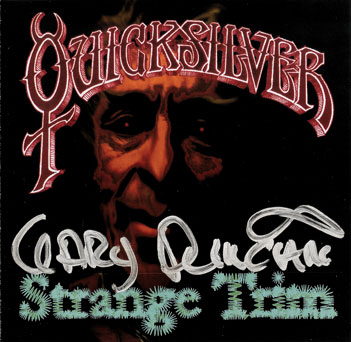
| Tracks | |||
|---|---|---|---|
| 1. | El Dorado | ||
| 2. | Strange Trim | ||
| 3. | Bubba Jeans (Inst) | ||
| 4. | Inner City Blues (live) | ||
| 5. | A Night in Tunisia (live) | ||
| 6. | Deja VooDoo (live) | ||
Three in the Side
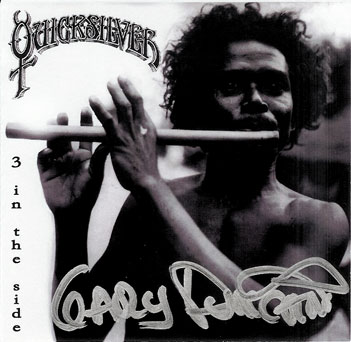
| Tracks | |||
|---|---|---|---|
| 1. | Inner City Blues | 17:06 | |
| 2. | Round Midnight | 7:36 | |
| 3. | Inner City Blues | 15:27 | |
Live at Sweetwater
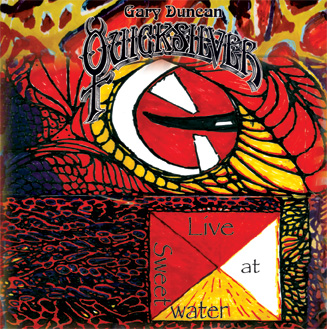
| Tracks | |||
|---|---|---|---|
| 1. | Close Enuf 4 Jazz | ||
| 2. | Senor Blues | ||
| 3. | Bottle Up and Go | ||
| 4. | Wide Laig | ||
| 5. | Maiden Voyage | ||
| 6. | Inner City Blues | ||
Live at the 7th Note
| Tracks | |||
|---|---|---|---|
| 1. | Close Enuf 4 Jazz | ||
| 2. | Blues for the Rich Man | ||
| 3. | Senor Blues | ||
| 4. | Inner City Blues | ||
| 5. | Breaking up Somebody's home | ||
| 6. | Round Midnight/Pool Hall Chili | ||
Six String Voodoo
| Tracks | |||
|---|---|---|---|
| 1. | Katmandu | ||
| 2. | Round Midnight | ||
| 3. | Pharaohs Dance | ||
| 4. | Baghdad Boogie | ||
| 5. | Don't Be Lonely | ||
| 6. | Ant's Romance | ||
| 7. | Sketches of Blavatsky | ||
Legendary psychedelic guitarist Gary Duncan of Quicksilver Messenger Service creates a new experience of sound and imagination with six all new songs and a completely new rendition of Round Midnight. A must for all QMS fans.
Quicksilver 07 Live
| Tracks | |||
|---|---|---|---|
| Recorded live at Ben-ees | |||
| 1. | Minor Swing | ||
| 2. | Senor Blues | ||
| 3. | Maiden Voyage | ||
| Recorded live at the Suwanee River | |||
| 4. | Round Midnight | ||
| 5. | Maiden Voyage | ||
Recorded live at the Suwanee River and Ben-ees.